Zero Motorcycles SR/S: The Electric Sports Tourer Challenging Convention
For more than a century, the internal combustion engine has defined motorcycling. The sound of an engine firing into life, the mechanical sensation of changing gears and the familiar rhythm of throttle, clutch and gearbox have all become integral parts of the riding experience. For many enthusiasts, these characteristics are as important as the journey itself.
Yet motorcycling is changing, and few manufacturers have embraced that transformation as enthusiastically as Zero Motorcycles.
The American company has spent years developing electric motorcycles that aim to deliver genuine riding enjoyment rather than simply provide an environmentally conscious alternative to conventional machines. Its SR/S is arguably one of the clearest expressions of that philosophy.
Combining sports motorcycle styling with a more relaxed riding position, sophisticated electronics and an electric powertrain, the SR/S occupies an interesting position in the market. It isn’t intended to be an uncompromising superbike, nor is it a conventional touring motorcycle. Instead, it attempts to bridge the gap between performance, practicality and everyday usability.
For British motorcyclists accustomed to petrol-powered sports tourers, the SR/S presents an intriguing proposition. There is no clutch lever, no gear selector and no exhaust note accompanying the acceleration. What remains is the fundamental pleasure of riding on two wheels, delivered in a distinctly different way.
And that raises an important question: once the novelty of electric propulsion has worn off, is the SR/S genuinely a motorcycle worth owning?

More EV News


Styling That Makes a Statement
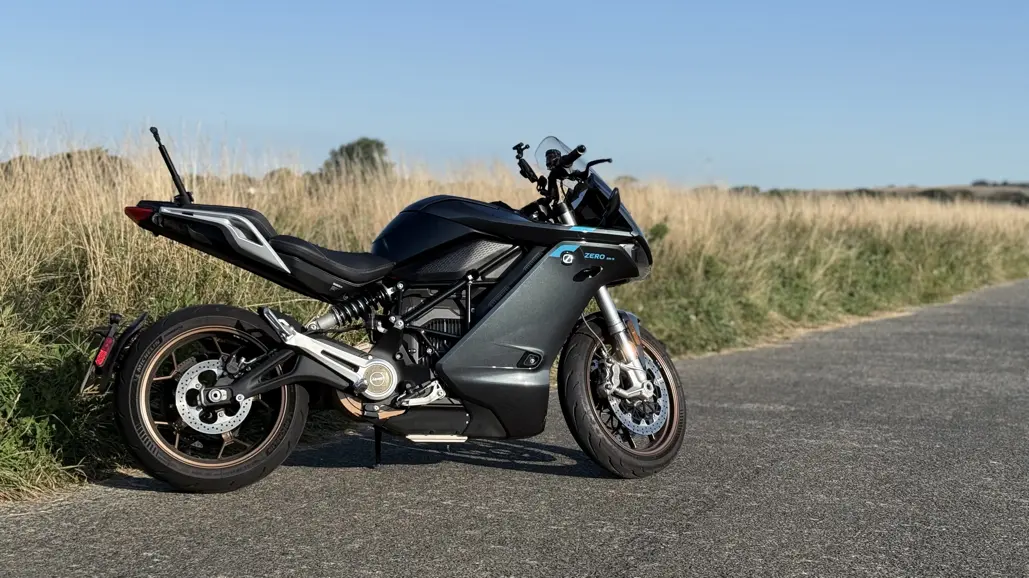
One of the SR/S’s greatest strengths is that it looks like a proper motorcycle rather than an experimental technology project.
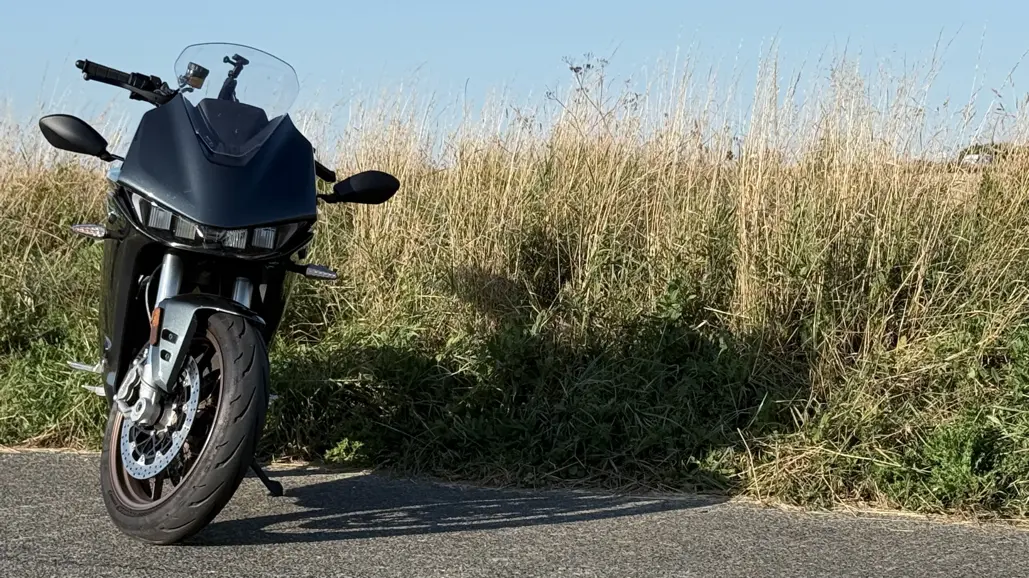
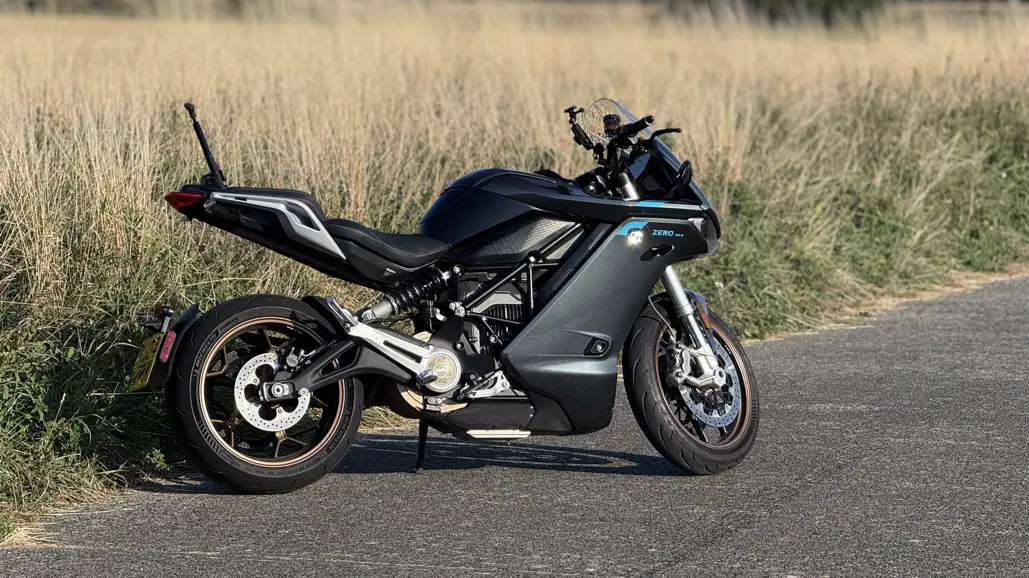
Its fully faired bodywork, sculpted fuel-tank-shaped upper section and purposeful stance give it a distinctly sporting appearance. The aerodynamic fairing integrates neatly with the motorcycle’s chassis, while the compact lighting arrangement and clean lines create a modern, almost futuristic aesthetic.
Unlike some electric motorcycles, which deliberately emphasise their unconventional construction, the SR/S adopts a relatively familiar silhouette. At a glance, it could easily be mistaken for a contemporary petrol-powered sports tourer.
Look more closely, however, and the differences become apparent.
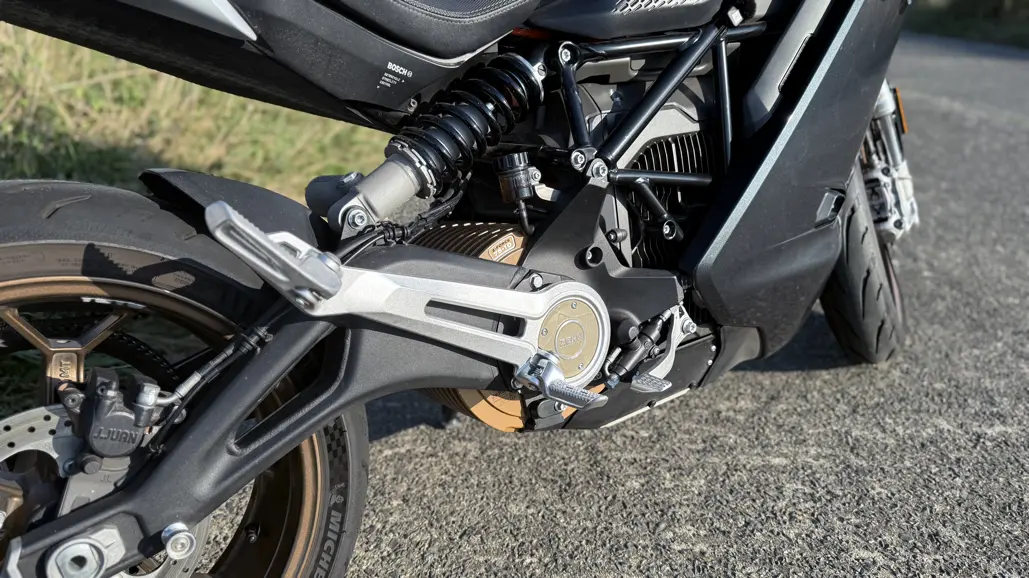
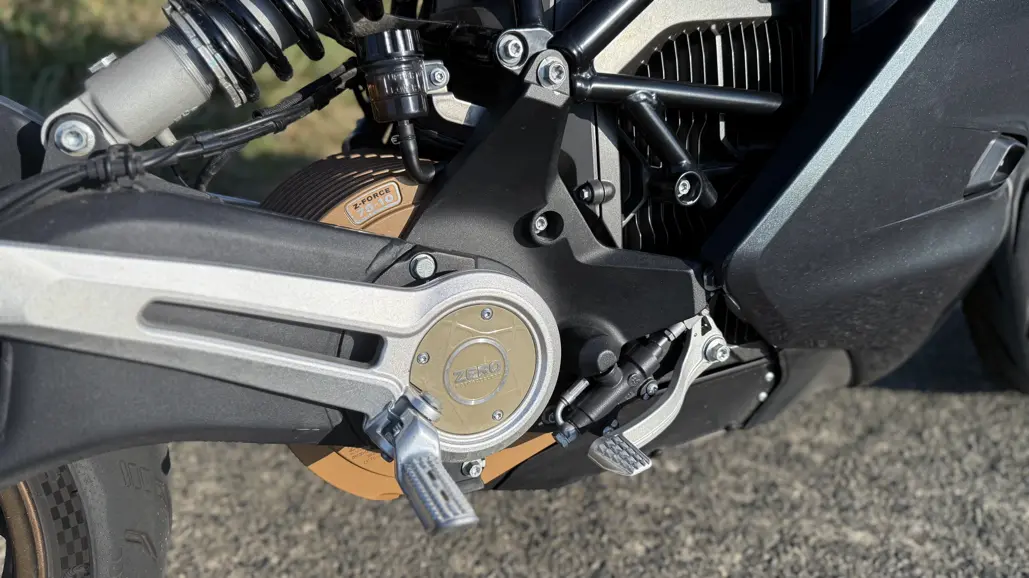
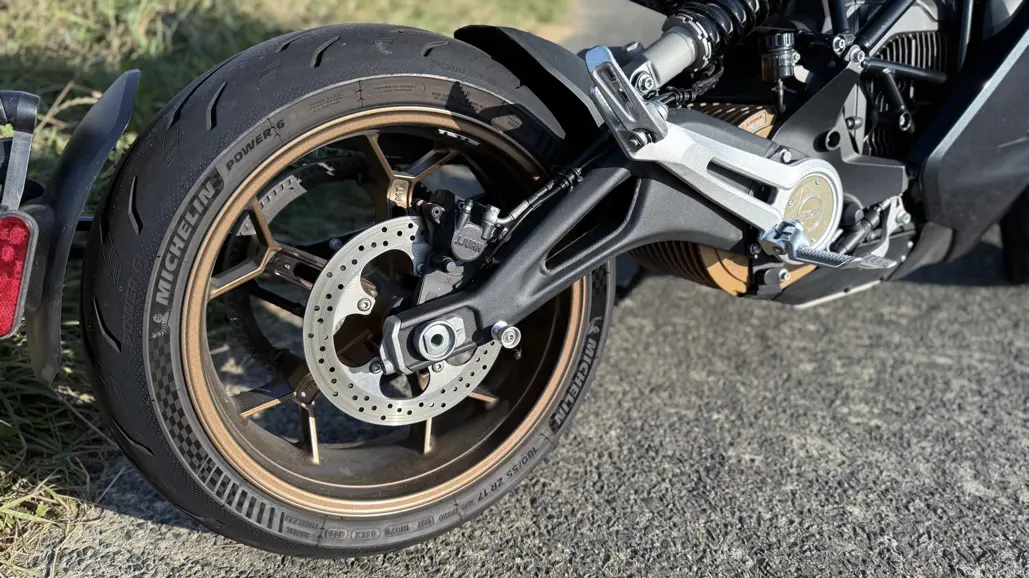
The absence of an exhaust system creates a cleaner appearance around the rear wheel, while the electric motor and substantial battery pack occupy the space traditionally reserved for an engine. A belt final drive replaces the familiar chain arrangement found on many sports motorcycles.
The fairing is more than a styling exercise. Zero developed the SR/S with aerodynamic efficiency in mind, using the bodywork to improve airflow around the motorcycle and rider. Reducing drag is particularly important for electric motorcycles, where sustained higher speeds can have a significant effect on available range.
The riding position also reflects the machine’s sports-touring ambitions. Compared with Zero’s naked SR/F, the SR/S offers a more upright and accommodating arrangement, with handlebars positioned to reduce pressure on the rider’s wrists.
The result is a motorcycle that appears sporty without demanding the physical commitment associated with a dedicated superbike.
Electric Performance: Instant Gratification
The heart of the SR/S is Zero’s Z-Force 75-10 electric motor, which delivers performance figures capable of attracting the attention of even committed sports motorcycle enthusiasts.
In its 17.3kWh specification, the motor produces approximately 111–113bhp, depending on the published model specification, together with a substantial 190Nm of peak torque. Maximum speed is quoted at 124mph (200km/h).
Those figures tell only part of the story.
Unlike a conventional petrol engine, which develops its strongest performance within a particular rev range, the SR/S provides immediate and remarkably smooth acceleration. There is no waiting for the engine to reach its power band, no need to select a lower gear and no interruption to the delivery of power.
Simply open the throttle and the motorcycle responds.
This uninterrupted acceleration is one of the defining characteristics of high-performance electric motorcycles. The sensation can be startling, particularly for riders accustomed to the mechanical progression of a conventional engine.
Yet the SR/S is not simply about outright speed. Its ability to deliver controlled, accessible performance is arguably more relevant to everyday riding.
Overtaking becomes a straightforward exercise, while accelerating away from junctions requires little effort. In urban environments, the absence of a clutch and gearbox makes stop-start riding particularly convenient.
The lack of engine vibration also contributes to a distinctive sense of refinement.
Of course, some riders will miss the involvement of changing gears and the soundtrack accompanying a powerful petrol engine. Those characteristics are part of motorcycling’s appeal, and their absence cannot simply be dismissed.
Nevertheless, the SR/S demonstrates that performance and excitement do not necessarily depend on combustion.
Handling, Suspension and Braking
Electric motorcycles inevitably face questions about weight, largely because of the substantial battery packs required to provide meaningful range.
The SR/S has a quoted kerb weight of approximately 235kg, placing it firmly in sports-touring territory rather than among lightweight sports machines.
That weight is noticeable when manoeuvring the motorcycle at walking pace, particularly when parking or negotiating confined spaces. Once moving, however, the relatively centralised battery mass helps create a more balanced feel.
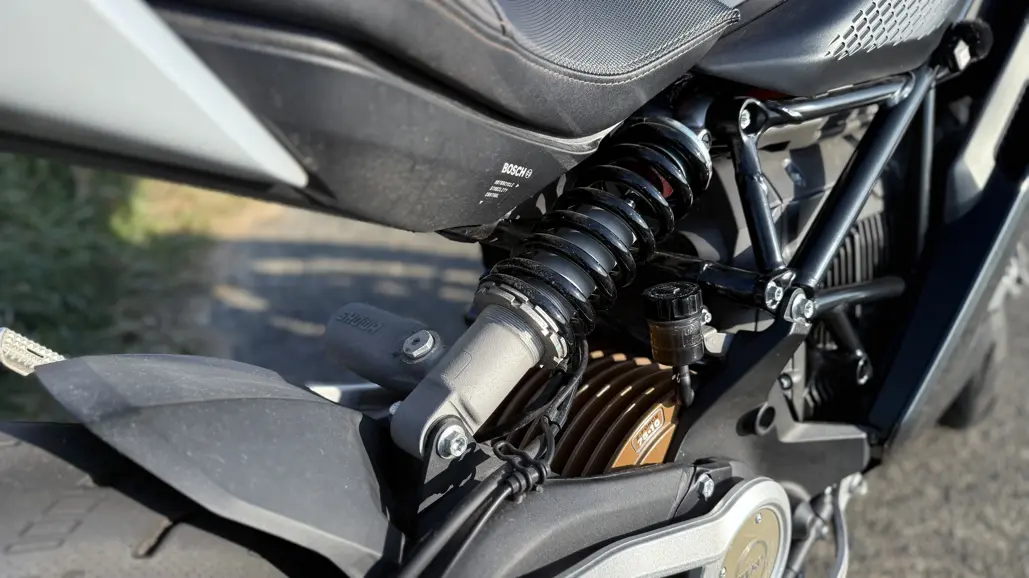
A steel trellis frame provides the foundation, complemented by a custom swingarm and adjustable Showa suspension.
At the front, a 43mm Showa Big Piston Separate Function fork offers adjustment for preload, compression and rebound damping. A similarly adjustable Showa rear shock completes the arrangement.
This equipment reflects the SR/S’s dual-purpose personality. The suspension must provide sufficient control for enthusiastic cornering without becoming unnecessarily harsh during everyday commuting or longer journeys.
Independent road tests have praised the motorcycle’s stability and composure, although its weight means it demands more deliberate steering input than a lighter sports bike.
Braking performance is equally important given the combination of weight and immediate acceleration.
Twin 320mm front discs are gripped by radial four-piston J.Juan calipers, with a single rear disc providing additional stopping power. Bosch Motorcycle Stability Control adds sophisticated electronic assistance, including cornering ABS and traction control.
Regenerative braking provides another dimension.
When the rider closes the throttle, the motor can recover some energy while helping slow the motorcycle. The strength of this effect can be tailored through the riding settings, allowing riders to choose between stronger deceleration and a more free-rolling sensation.
It is an unfamiliar characteristic initially, but one that can become surprisingly natural with experience.
Technology at the Rider’s Fingertips
Modern motorcycles increasingly rely on sophisticated electronics, and the SR/S is no exception.
Zero’s Cypher III+ operating system manages the motorcycle’s performance and electronic functions, providing a level of customisation that would have been difficult to imagine on a conventional motorcycle only a generation ago.
A five-inch colour TFT instrument display presents essential information, including speed, remaining battery charge, estimated range and selected riding mode.
Riders can choose between several predefined modes, including Sport, Street, Eco and Rain, with custom settings available for those who prefer greater control over the motorcycle’s behaviour.
These settings influence throttle response, power delivery and regenerative braking.
Sport mode prioritises responsiveness and performance, while Eco mode encourages more economical riding. Rain mode moderates the motorcycle’s behaviour to provide greater reassurance in less favourable conditions.
Smartphone connectivity through Zero’s companion app provides additional functionality, including access to motorcycle information, ride data and certain configuration options.
Cruise control and heated grips further underline the SR/S’s touring credentials.
The important distinction is that this technology serves a practical purpose. It is not simply there to impress prospective buyers in a showroom.
The ability to adjust how the motorcycle responds to different conditions can make the SR/S more adaptable, whether negotiating wet British roads, commuting through traffic or enjoying a dry Sunday ride.
However, greater electronic sophistication also introduces a degree of complexity. Software support, diagnostic capability and access to knowledgeable dealers are important considerations for long-term ownership.
The Range Question
For all its performance and technological sophistication, the SR/S must confront the issue that continues to dominate discussions surrounding electric motorcycles: range.
The 17.3kWh battery specification carries a manufacturer-quoted city range of up to 171 miles, with high-speed highway commuting quoted at 116 miles under Zero’s stated test conditions.
These figures demonstrate how far electric motorcycle technology has progressed, but they should not be interpreted as guarantees of what every rider will achieve.
Real-world range depends on numerous factors, including speed, temperature, terrain, wind conditions, rider weight and the use of accessories.
Motorway riding is particularly demanding because aerodynamic resistance increases rapidly with speed. Maintaining sustained higher speeds can therefore consume considerably more energy than riding through towns or along slower country roads.
Cold weather may also reduce the available range, making winter commuting a consideration for British owners.
For someone travelling 20 or 30 miles each way to work, the SR/S could provide more than sufficient capacity for daily use, with overnight charging restoring the battery before the next journey.
Long-distance touring presents a different challenge.
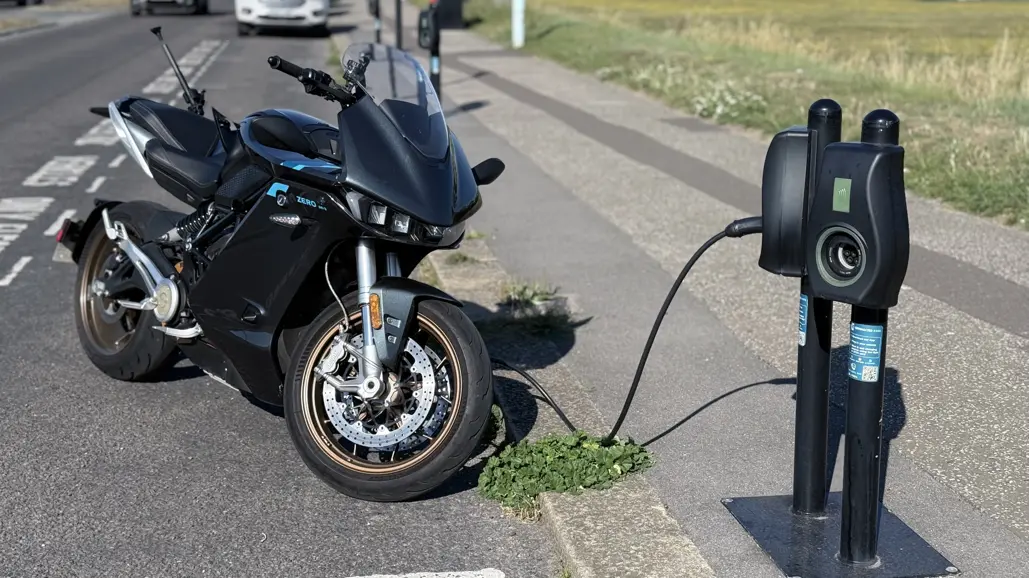
A rider planning several hundred miles in a day must consider not only the motorcycle’s range but also the location, reliability and compatibility of charging facilities.
The SR/S is therefore best understood as a motorcycle whose practicality depends heavily on how it will be used.
For regular commuting and recreational
riding within a familiar area, range anxiety may quickly become irrelevant. For riders accustomed to covering hundreds of motorway miles with only brief fuel stops, the adjustment is considerably greater.
Charging: Convenience or Compromise?
Charging is another area where the electric ownership experience differs fundamentally from conventional motorcycling.
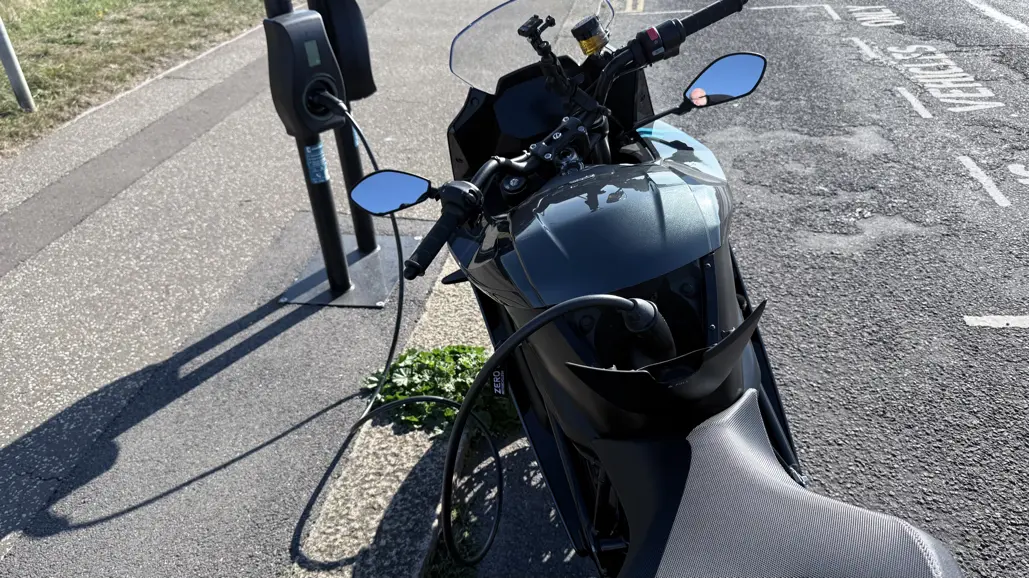
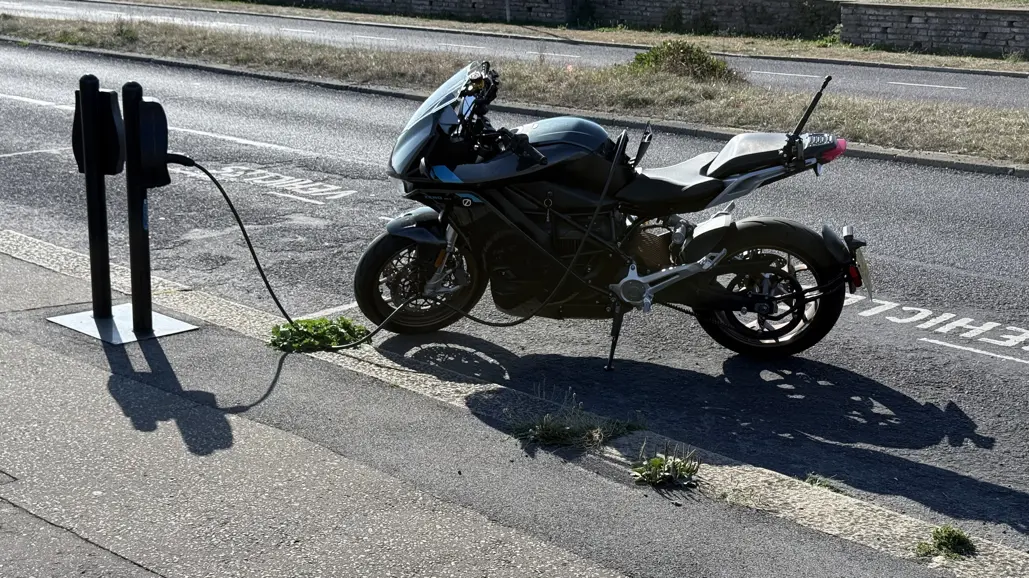
The 17.3kWh SR/S specification features an integrated 6.6kW onboard charger, with an optional accessory increasing charging capability to approximately 12.6kW.
Zero quotes a 20–80% charging time of approximately 1.4 hours using the standard Level 2 arrangement, reducing to around 43 minutes with the optional rapid charging module under its specified conditions.
It is important to distinguish this AC charging arrangement from the high-power DC rapid charging* offered by many modern electric cars. (This is about to change; click to learn more about the changes)
The SR/S cannot simply take advantage of every high-output motorway charging station. Riders must identify compatible charging points and understand the limits of the motorcycle’s onboard equipment.
For owners with suitable home charging facilities, the process can be relatively painless. Returning home, connecting the motorcycle and beginning the next day with a replenished battery may prove more convenient than visiting a petrol station.
For riders relying entirely on public infrastructure, however, the calculation changes.
Charging availability, parking arrangements and waiting times all become part of the ownership experience.
Touring requires more preparation, although planned charging stops can also provide opportunities for refreshments and rest.
The essential point is that electric touring demands a different approach rather than necessarily being impossible.
For some riders, that adjustment will be entirely acceptable. For others, particularly those who value spontaneous long-distance journeys, it may remain a significant drawback.
Everyday Practicality and Ownership
One of the SR/S’s less obvious attractions is the potential reduction in routine maintenance.
There are no engine oil changes, spark plugs, valve clearances or conventional clutch components to worry about. The belt final drive also eliminates the regular cleaning and lubrication associated with a chain.
That does not mean the motorcycle is maintenance-free.
Tyres, brakes, suspension components, bearings and other consumable items still require inspection and replacement. Battery health, electronic systems and manufacturer-recommended servicing remain important.
Nevertheless, the relative mechanical simplicity of the electric powertrain could appeal to riders seeking a motorcycle that requires less routine attention.
Running costs are another consideration.
Electricity can be considerably cheaper than petrol on a cost-per-mile basis, particularly when charging at home on a favourable tariff. Public charging, however, may be substantially more expensive.
Purchase price remains a considerable obstacle. UK pricing has varied by model year and promotional offer, with Zero’s official UK page listing a 2024 SR/S at a reduced £17,950 against a £20,700 original price. A current UK dealer listing advertises the SR/S from £17,400, although prospective buyers should confirm the exact specification, availability and final on-the-road price.
That places the Zero against some highly accomplished petrol-powered motorcycles.
There are also questions surrounding long-term battery replacement costs, depreciation and the strength of the second-hand electric motorcycle market.
These are legitimate concerns, especially for buyers who traditionally expect to keep their motorcycles for many years.
A New Direction for Sports Touring
Perhaps the most interesting aspect of the SR/S is not its electric motor, advanced electronics or aerodynamic bodywork.
It is the way the motorcycle challenges established assumptions about what makes riding enjoyable.
Without engine noise or gear changes, the experience becomes more focused on acceleration, braking, cornering and the surrounding environment.
The rider hears more of the wind and road surface, while the smooth power delivery creates a sensation quite different from a conventional sports tourer.
For some, this will feel liberating. For others, something essential will be missing.
Neither reaction is unreasonable.
The SR/S also illustrates the challenges facing the wider electric motorcycle industry. Performance is no longer the principal obstacle. Electric motorcycles can already deliver acceleration and responsiveness capable of matching, and sometimes exceeding, their petrol-powered counterparts.
The more difficult questions concern purchase price, charging infrastructure, battery capacity and the flexibility required for long-distance travel.
Zero has made considerable progress in these areas, but there is still work to be done before electric motorcycles can offer complete parity with petrol-powered machines across every type of riding.
Verdict: A Compelling Alternative, But Not Yet for Everyone
The Zero Motorcycles SR/S represents a convincing demonstration of what electric motorcycling can achieve.
Its combination of instant torque, sophisticated rider assistance, comfortable ergonomics and distinctive styling makes it far more than an environmentally motivated purchase.
This is a motorcycle designed to be enjoyable in its own right.
For riders with access to convenient home charging, particularly those who commute regularly and enjoy weekend rides, the SR/S offers a genuinely appealing alternative to a conventional petrol-powered sports tourer.
Its effortless performance and relatively straightforward maintenance requirements are significant advantages.
However, the premium purchase price, limitations of public charging and reduced range during sustained high-speed riding cannot be ignored.
Those shortcomings are particularly relevant to British motorcyclists who regularly undertake lengthy journeys or prefer the freedom to travel without planning charging stops.
The SR/S is unlikely to convince every traditional enthusiast to abandon petrol power, nor should that necessarily be its objective.
Instead, it demonstrates that the future of motorcycling need not be defined by compromise alone.
Electric motorcycles can offer their own distinctive character, performance and sense of enjoyment.
The Zero SR/S may not replace the traditional sports tourer for everyone, but it provides persuasive evidence that electric motorcycling deserves to be taken seriously.
And perhaps that is its greatest achievement.
Zero SR/S – Quick Specifications
Reference: Zero’s published 17.3kWh SR/S specification. Figures and equipment may vary by model year and market.
| Specification | Details |
|---|---|
| Motor | Z-Force 75-10 electric |
| Peak power | 111bhp (83kW), US specification |
| Peak torque | 190Nm |
| Battery | 17.3kWh maximum, 15.1kWh nominal |
| Transmission | Clutchless direct drive |
| Final drive | Carbon-reinforced belt |
| Maximum speed | 124mph (200km/h) |
| Claimed city range | Up to 171 miles |
| Claimed high-speed range | 116 miles |
| Standard onboard charger | 6.6kW |
| Front suspension | Adjustable 43mm Showa forks |
| Rear suspension | Adjustable Showa monoshock |
| Front brakes | Twin 320mm discs, J.Juan calipers |
| Seat height | 787mm |
| Kerb weight | 235kg |
| UK price reference | From £17,400, dealer advertised |