

Octopus Charge – Installation Day: Our First-Hand Experience
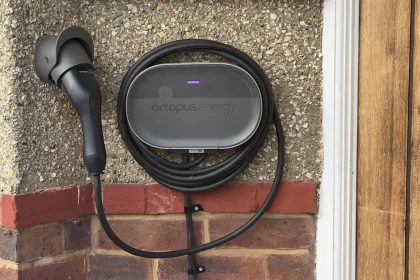
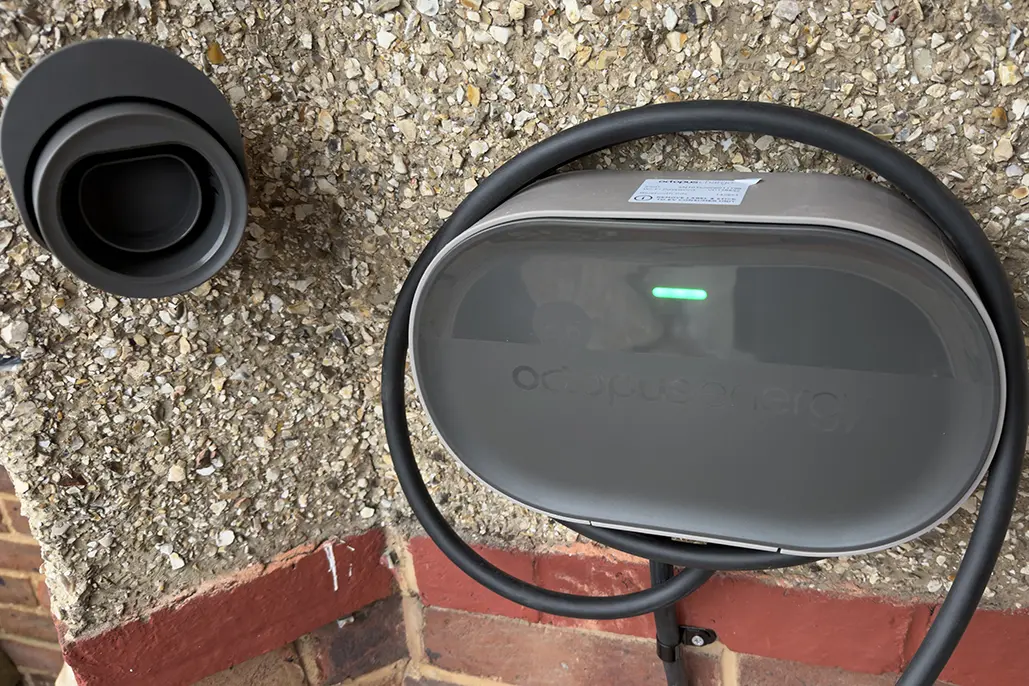
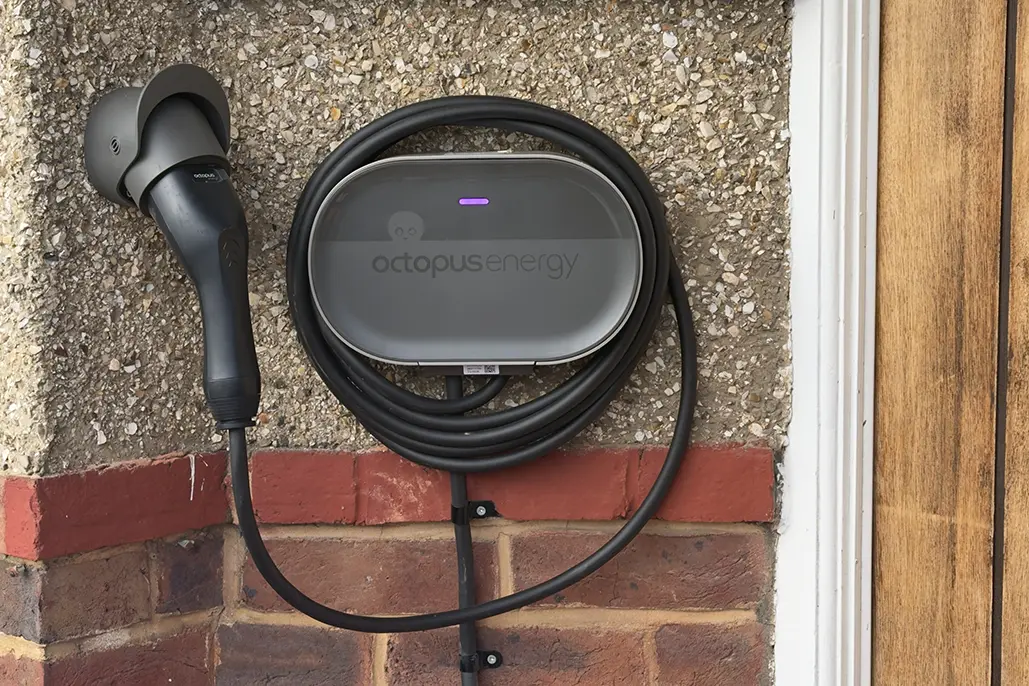
Following our previous article exploring the potential benefits of installing an Octopus Energy home EV charger for both electric cars and electric motorcycles, we’re pleased to report that our Octopus Charge installation has now been completed.
While the charger has primarily been installed for our electric car, our longer-term interest here at eMotorcyclist is to explore how the same charging infrastructure can benefit owners of electric motorcycles equipped with a compatible Type 2 charging socket.
A Slight Delay to Proceedings
Unfortunately, things didn’t quite go according to plan initially. Our original installation appointment had to be cancelled due to the allocated installer being ill, meaning we had to wait a further two weeks before the next available installation slot.
While the delay was understandably disappointing, these things can happen. It did, however, highlight that anyone arranging a home EV charger installation should allow for the possibility of delays, particularly if they are coordinating the installation with the delivery of a new electric vehicle.
Thankfully, the engineer arrived on the second booked installation date, and from that point onwards, everything went smoothly.
Choosing the Right Location for Our Octopus Charge
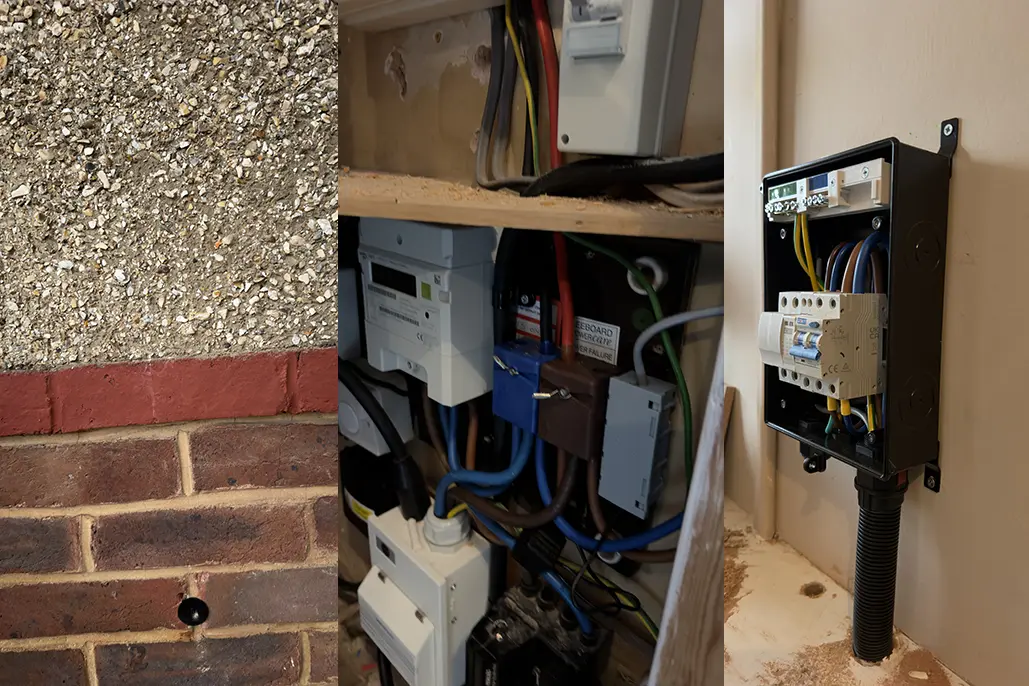
Before commencing any work, we went through the proposed location of the charger with the installation engineer, discussing where we wanted it positioned and the practicalities of connecting it to our property’s existing electrical supply.
Choosing the right location for a home EV charger is an important consideration, particularly if, like us, you intend to use it for both an electric car and potentially an electric motorcycle.
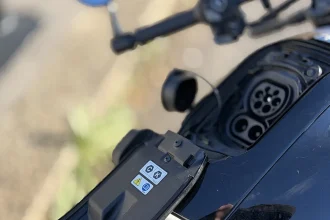
While the immediate priority was ensuring the charging cable could comfortably reach our electric car, we also wanted to consider future motorcycle charging requirements. Depending on the motorcycle, the position of its Type 2 charging socket can vary considerably.

Fortunately, our preferred location was straightforward from an installation perspective, with no requirement for lengthy cable runs or complicated routing.

Modern Classic Motorcycle News - Kindle Edition
A Professional and Straightforward Installation
Once the location had been agreed upon, the engineer proceeded with the installation of our Octopus Energy-branded home charger.
The installation was carried out professionally and in accordance with the relevant electrical safety requirements, including the applicable UK wiring regulations.
Unlike a conventional domestic electrical socket, a dedicated EV charging point is designed to deliver sustained electrical power over extended periods. This makes correct installation, appropriate electrical protection and thorough safety testing particularly important.
Throughout the installation, everything progressed smoothly, with no unexpected complications or additional work required.
The straightforward nature of our installation meant that the engineer was able to complete the work without the need for extensive cabling or significant alterations to our existing electrical infrastructure.
Installed in Just Three Hours
Octopus Energy advises customers to allow approximately four hours for a standard home EV charger installation, although the actual time required will naturally vary depending on the property and the complexity of the work involved.

In our case, the entire installation took approximately three hours, comfortably within the anticipated four-hour window.
The relatively short installation time was largely down to the straightforward nature of the job, with the chosen charger location requiring no lengthy cable runs or complicated electrical work.
Of course, every property is different, and some installations may require considerably more time, particularly where additional electrical upgrades or longer cable routes are necessary.
From our perspective, however, the installation was completed efficiently and without any unexpected complications.
Testing, Commissioning and Documentation
With the physical installation completed, the engineer proceeded with the necessary testing and commissioning of the Octopus Charge unit.
This is an important part of any home EV charger installation, ensuring that the equipment and its electrical connection are operating correctly and safely before being put into everyday use.
Once the testing had been completed, we were supplied with the appropriate installation documentation for our records.
Having the relevant documentation is important, not only for confirming that the installation has been completed but also for future electrical maintenance, property records and any potential warranty or support enquiries.
Our First Charging Session
With the installation completed, it was time to put our new Octopus Charge to its first practical test.
For this initial charging session, we used our electric car rather than an electric motorcycle. The purpose was simply to confirm that the charger was functioning correctly and that the vehicle could establish a charging connection without any problems.
We’re pleased to report that our initial test charge was completed without any issues.
The successful charging session marked the completion of the installation process and the beginning of our everyday experience with the Octopus Charge system.
Over the coming weeks, we’ll be familiarising ourselves with the charger’s features, exploring its charging controls, smart scheduling capabilities and monitoring electricity consumption.
However, this initial test was relatively brief, so it would be premature to draw any conclusions regarding long-term reliability, charging efficiency or potential running-cost savings.
Next Month: Charging an Electric Motorcycle
Of course, the aspect of this installation that we’re particularly interested in here at eMotorcyclist is its potential application for electric motorcycles.
Next month, December 2026, we intend to put our Octopus Charge home charger to the test with a compatible electric motorcycle equipped with a Type 2 AC charging connection.
This will provide an opportunity to move beyond the theoretical compatibility discussed in our previous article and explore how the system performs in a real-world electric motorcycle charging scenario.
During our upcoming test, we’ll be looking at:
- Ease of connecting an electric motorcycle to the Octopus Charge.
- Compatibility with the motorcycle’s Type 2 AC charging system.
- Actual charging power and charging times.
- Electricity consumption and associated charging costs.
- Smart charging and scheduling functionality.
- Practicality of sharing a single home charger between an electric car and an electric motorcycle.
- Overall convenience for everyday electric motorcycle ownership.
It’s worth reiterating that the maximum charging rate will depend on the motorcycle’s onboard AC charger rather than simply the maximum output of the Octopus Charge unit.
We hope our forthcoming test will provide some useful real-world information for riders considering installing a dedicated home EV charger or those who already have one installed for their electric car.
Our Initial Verdict: Octopus Charge Installation
Despite the disappointment of our original installation appointment being cancelled and the subsequent two-week wait, our overall experience of the actual Octopus Charge installation has been positive.
The engineer arrived on the rearranged date, discussed our preferred charger location, completed the installation professionally and carried out the necessary safety checks and commissioning. The entire process took approximately three hours, with no unexpected complications, and our initial charging session with our electric car was completed without any issues.
So far, so good.
The next stage of our experience will be to explore the charger’s capabilities in everyday use, including its smart charging features and, most importantly for eMotorcyclist readers, its ability to charge a compatible electric motorcycle.
With more households potentially considering both electric cars and electric motorcycles, the ability to use a single home charging point for both could make electric two-wheeled ownership an increasingly attractive proposition.
Whether you’re already an electric motorcycle owner or considering making the transition to electric two wheels, we hope our ongoing experience will provide a useful insight into the practicalities of home EV charging.
Look out for our follow-up feature in December, when we’ll be putting our Octopus Charge home EV charger to the test with an electric motorcycle.
Follow eMotorcyclist.co.uk for our continuing coverage of electric motorcycles, EV charging technology, renewable energy and sustainable living.
Looking to install a charger, install solar or are simply looking to switch here over to Octopus and use our link Octopus Energy if you sign up, we share £100 credit referral fee* so £50 for you and £50 for us. Credit is paid once the new user is on supply and their first month’s direct debit has been successfully taken.
Note: This article is not sponsored by or endorsed by Octopus Energy; they happen to be our energy supplier.